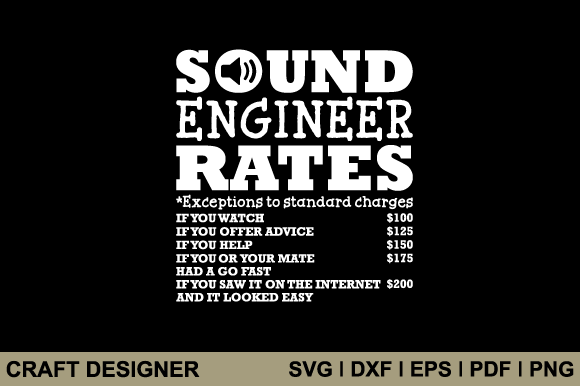
Reviewing the Sound Engineer Funny Rates SVG
As a designer who has spent years translating digital concepts into thread, I approach every new machine embroidery design with a mix of curiosity and skepticism. We have all been there: downloading a file that looks crisp on the screen but turns into a tangled mess of bird nests on the fabric. Recently, I took a close look at the Sound Engineer Funny Rates Svg Cut File, evaluating it not just as a graphic asset, but as a viable component for real-world embroidery projects. This review is for fellow crafters, Etsy sellers, and handmade shop owners who need to know if this design holds up under the needle.
First Impressions and Visual Personality
The first thing that strikes you about this design is its thematic clarity. It taps into a specific niche humor that resonates deeply with audio professionals, musicians, and studio enthusiasts. The layout is clean, avoiding the clutter that often plagues novelty designs. For an embroidery file intended for commercial use, this simplicity is a strength. Complex, overly detailed graphics often fail when scaled down, but the bold lines and clear typography here suggest it will maintain legibility even in smaller hoop sizes.
The mood is playful yet professional. It does not rely on chaotic elements or excessive decoration. Instead, it uses wit as its primary hook. When I visualized this on a tote bag design or a canvas apron, the contrast between the serious profession of sound engineering and the humorous "rates" concept created an immediate connection. This kind of relatable humor is gold for small shop products because it encourages social sharing and word-of-mouth marketing.
Real-World Application Scenarios
To truly test the viability of any digital embroidery file, I imagine it on various substrates. Here is how I see the Sound Engineer Funny Rates Svg Cut File performing in practical scenarios:
- Custom Apparel: This design shines on sweatshirt embroidery. The thick fabric of a hoodie or crewneck provides a stable base for the stitches, allowing the text to pop. It would also work well on high-quality t-shirts, provided you use the right stabilizer to prevent puckering.
- Accessories and Gear: Imagine this stitched onto a durable canvas tote or a structured cap. For caps, you must be cautious with curved surfaces, but the relatively flat nature of the text makes it a candidate for front-panel placement if the stitch density is managed correctly.
- Studio Decor and Gifts: As a personalized gift for a podcast host or a recording engineer, this could be embroidered on a pillow cover or a heavy linen tea towel. It adds a touch of personality to home studios without looking cheap or mass-produced.
- Patches and Badges: If you are creating embroidered patches for sale, this design’s clear boundaries make it ideal for cutting out and applying to jackets or bags later.
Technical Considerations for Stitching
While the visual appeal is strong, the technical execution is where many designs fail. Since this product comes in formats like SVG, DXF, EPS, PDF, and PNG, it is primarily a vector-based cut file. However, for those using it as a reference for digitizing or converting into an applique design, there are critical factors to consider.
Stitch Density and Thread Choice: If you are digitizing this yourself or using software to convert the SVG, pay close attention to stitch density. Text-based designs can become dense quickly. Using a fill stitch for large letters might cause the fabric to pucker, especially on thinner materials. I recommend using a satin stitch for smaller text elements and a combination of satin and running stitches for larger graphical components. Always test your thread colors against the fabric. High contrast is key for readability; a dark thread on a dark shirt will render the joke invisible.
Fabric Texture and Stabilization: The success of this crafts project depends heavily on the fabric texture. On textured fabrics like terry cloth or fleece, fine details may get lost. In such cases, simplifying the design or increasing the size is necessary. Always use a cut-away stabilizer for stretchy fabrics like jersey knits to ensure the design remains stable after washing. For woven fabrics like cotton canvas, a tear-away stabilizer might suffice, but testing on scrap fabric is non-negotiable.
Navigating Limitations and Care
There are situations where you should use this design with caution. Avoid placing it on areas subject to high friction, such as the cuffs of sleeves or the bottom hem of a shirt, unless you reinforce the stitching. Also, be mindful of hoop size constraints. While the design is scalable, stretching it too large can reveal imperfections in the digitizing if you are converting it manually. Conversely, shrinking it too small may merge fine lines, making the text illegible.
For items that require frequent washing, such as baby embroidery items or kitchen towels, ensure that the thread used is colorfast and the stitching is secure. A loose thread can unravel the entire piece after a few cycles. This is particularly important for commercial embroidery where customer satisfaction and product longevity are paramount.
Business Value and Brand Consistency
For creative entrepreneurs and digital product sellers, the value of the Sound Engineer Funny Rates Svg Cut File lies in its niche appeal. It allows you to target a specific audience with a product that feels custom-made. When used in printable mockup previews for your online store, ensure the mockups accurately represent the texture of the embroidery. Buyers need to see the dimensionality of the stitches to understand the quality of the finished product.
This design supports brand consistency for shops that focus on profession-specific humor. It fits seamlessly into a catalog of design assets aimed at tech-savvy, creative professionals. By offering high-quality, well-tested designs, you build trust with your customers. They return not just for the humor, but for the assurance that the product will look as good in person as it does in the photos.
Final Designer Notes
Before launching this into your production line, take these practical steps:
- Test on Scrap Fabric: Never skip this step. Check for puckering, thread breaks, and registration issues.
- Check Licensing: Ensure you understand the terms of use for the downloaded files. Since you receive SVG, DXF, EPS, PDF, and PNG formats, clarify if the license covers commercial sales of physical items or if it is for personal use only.
- Mockup Verification: Create black and white mockups to check contrast and readability without the distraction of color.
- Customer Communication: If selling finished items, clearly describe the care instructions to maintain the integrity of the embroidery.
In conclusion, the Sound Engineer Funny Rates Svg Cut File is a promising asset for those in the Graphics and crafts space. With careful attention to technical details and a clear understanding of your target market, it can become a standout item in your craft business. It is not just a file; it is a tool for creating connection, humor, and value in your handmade offerings.